
2 March - 8 March
Section outline
-
Kia ora...9C2
Overview:
Colonialism & Imperialism: a study of various perspectives throughout time
At least since the Crusades (1095 CE - 1270 CE) and the conquest of the Americas (1492 - 1800), political theorists have struggled with the difficulty of finding agreement where our ideas about justice and natural law meet with the practice of European sovereignty over non-Western peoples. In the nineteenth century, the tension between liberal thought and colonial practice became particularly acute, as dominion of Europe over the rest of the world reached its peak.
Like colonialism, imperialism also involves political and economic control over a dependent territory.

Colonialism is not a modern feature of World history, examples of one society gradually expanding their control over neighbouring territories and re-settling its people on the newly conquered territory. The ancient Greeks set up colonies as did the Romans, the Moors, and the Ottomans, to name just a few of the most famous examples.
Colonialism, then, has no specific time or place. The difficulty of defining colonialism stems from the fact that the term is often used as a synonym for imperialism. Both colonialism and imperialism were forms of conquest that were expected to benefit Europe economically and strategically.
The term imperialism often describes cases in which a foreign government administers a territory without significant settlement;
Our Learning Context: He waka eke nona - Turangawaewae (stomping ground/place to stand)
Our inquiry this week will provide a gateway into our context in terms of the conceptual interpretation of the whakatauki
we are working with. A place to stand, or turangawaewae, is an important aspect of the system of values within
Te Ao Maori (the Maori world). Yet, it is not solely the rapunga whakaaro (philosophy) of Maori people. The idea of having
'a place to stand' is of global significance, especially in relation to the history of Colonialism and Imperialism. We will explore and reflect
upon the Colonisation histories of the African Continent, China, India, America, and finally we will return to Aotearoa for a case study. This
term we are aiming to compare and contrast the experiences of Colonialism around the world, with the experiences of Colonialism in NZ.
Success Criteria: I can/have...- record high quality notes from presentations using a specific strategy for note-taking.
- list multiple perspectives and what they emphasise in the analyses they give regarding colonialism and/or imperialism.
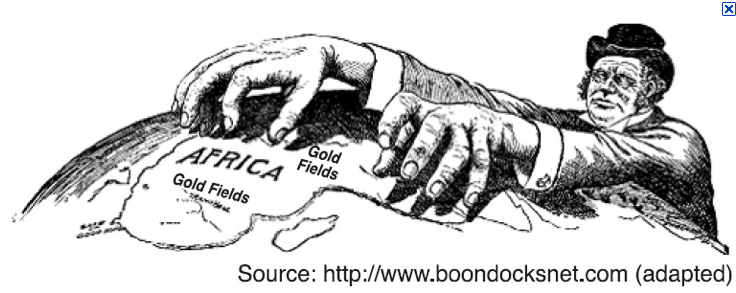
- recognise the motivations for various imperial powers to create the "Scramble for Africa"
- connect the colonial history of Africa (from the 16th century) logically, to the modern day struggles faced in many African nations.
- reflect on how the colonial histories of Aotearoa, New Zealand & the African continent have key differences worth comparing in an analysis.
Activities
See Google classroom:
Welcome to the Scramble for Africa! You will take on the role of a European country ready to colonize the continent of Africa. Your goal is to claim as much land and as many resources as possible, though your specific objectives will vary. All of the rules you need to play are built into the game – good luck!
Homework Policy:Students are NOT obligated to complete ANY homework in Global Studies in 9C2, it is your personal choice to self-regulate your learning this year. I will, of course, provide opportunities for you to engage with a variety of learning strategies in class. This independence will to allow you to experiment with time management strategies, which is a lifelong skill you need to be equipped with for your educational future. However, if you are wanting more work; either ask me for extension learning, or you are always welcome to work on classwork at home.
Academic evidence for the value of minimising homework in Junior College:
https://www.healthline.com/health-news/children-more-homework-means-more-stress-031114#3
