25 March - 31 March
Section outline
-
Enter text here...

EXPLORE / TŪHURA learning intentions:
- We are EXPLORING concepts have been contested and mean different things to different groups.
- We are EXPLORING the values behind diverse perspectives within and between groups, and explain the implications of missing perspectives.
- We are EXPLORING...
Pono: Hauora

Awhinatanga: Culturally Connected

Enter text here...
1. Complete any unfinished work from the Land Settlements Powerpoint and section of worksheets
2. Complete worksheet attached on Maori and European Colonialism
3. Complete allocated EP tasks on the Land Wars.Revision for assessment beginning Wednesday
The Māori, New Zealand, and European Colonialism
.
Learning Stations
STATION 1
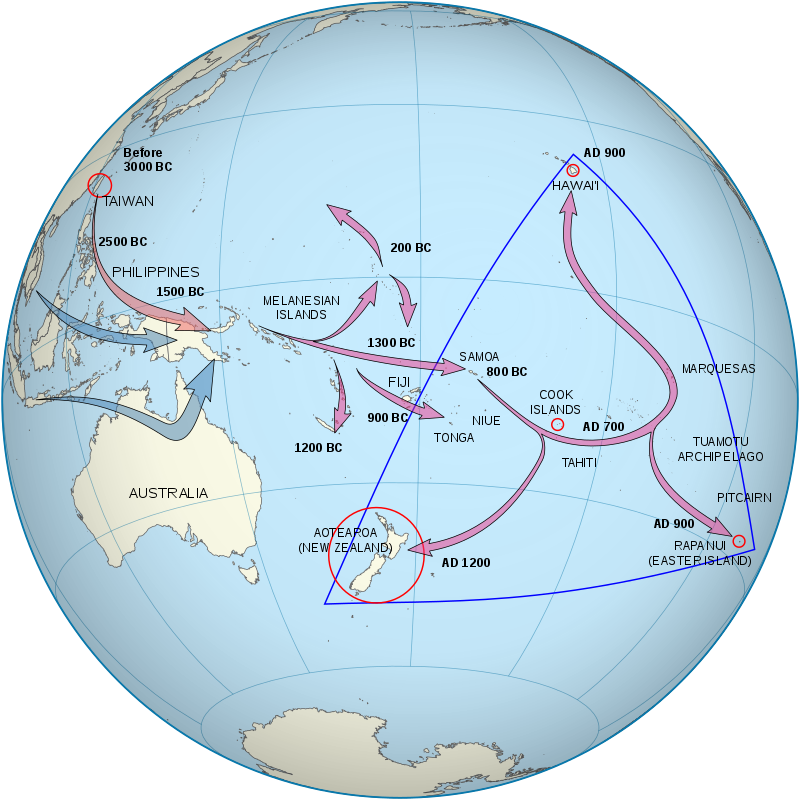
Māori Settlement of New Zealand and the Pacific. Geoff Chambers 2008.
Background Information: The history of the Māori began with the arrival of Polynesian settlers in New Zealand, in a series of ocean migrations in canoes starting from the late 13th or early 14th centuries. Over several centuries of isolation, the Polynesian settlers formed a distinct culture that became known as the Māori.
What is being depicted above? How can you be sure?
According to this image where did the Māori People originate from?
How did the Māori travel from island to island?
Hypothesize on some of the push pull factors that motivated them to settle in the Pacific.
STATION 2
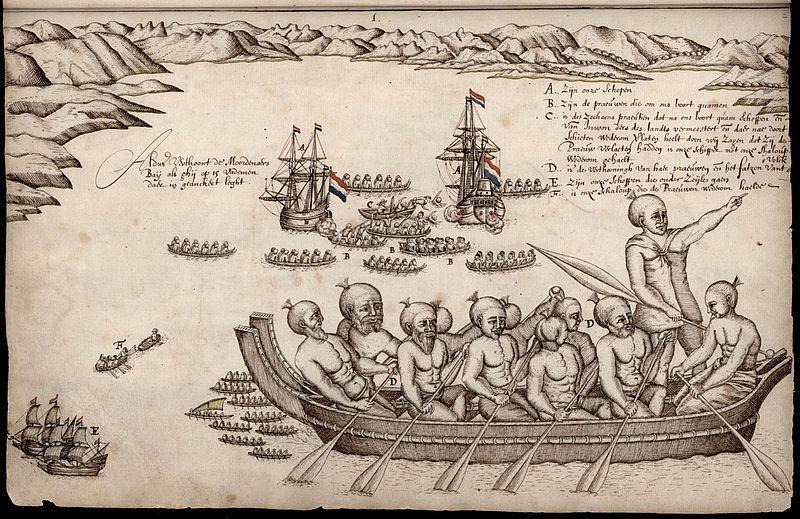
The first European Impression of Māori, at Murderers' Bay in Abel Tasman's travel journal (1642)
Background Information: The first Europeans known to reach New Zealand were the crew of Dutch explorer Abel Tasman who arrived in his ships Heemskerck and Zeehaen. Tasman anchored at the northern end of the South Island in Golden Bay (he named it Murderers' Bay) in December 1642 and sailed northward to Tonga following an attack by local Māori.
Who are the individuals in the image above?
What do the individuals all have in common?
According to this image were there more Māori or Dutch individuals in this first encounter? How might this have influenced the encounter?
STATION 3
New Zealand Land Company Instructions to Colonel Wakefield, May 1839.
Background Information: The Company provided Wakefield with a lengthy list of instructions to be carried out on his arrival. He was told to seek land for settlements where there were safe harbors that would foster export trade, rivers allowing passage to fertile inland property, and waterfalls that could power industry.
"You will readily explain that after English emigration and settlement a tenth of the land will be far more valuable than the whole was before ... the intention of the Company is not to make reserves for the Native owners in large blocks, as has been the common practice as to Indian reserves in North America, whereby settlement is impeded, and the savages are encouraged to continue savage, living apart from the civilized community ... instead of a barren possession with which they have parted, they will have a property in land intermixed with the property of civilized and industrious settlers and made really valuable by that circumstance."
What was the goal/purpose of the New Zealand Land Company?
Elaborate on why “English emigration and settlement” would make the land more valuable than before.
According to this text would the Māori still be in possession of their land?
Why do the British send instructions against creating Indian reserves? What was their reasoning?
STATION 4
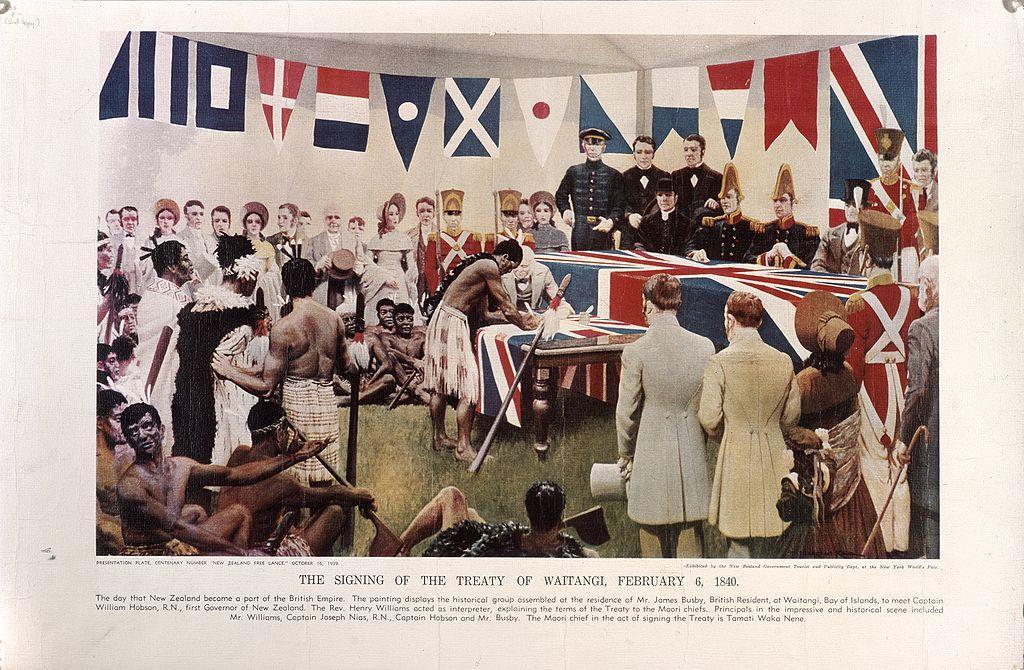
Treaty of Waitangi. February 6, 1840
Background Information: The treaty was written at a time when the New Zealand Company, acting on behalf of large numbers of settlers and would-be settlers, were establishing a colony in New Zealand, and when some Māori leaders had petitioned the British for protection against French incursions.
Article the first:
The Chiefs of the Confederation of the United Tribes of New Zealand and the separate and independent Chiefs who have not become members of the Confederation cede to Her Majesty the Queen of England … of Sovereignty which the said Confederation or Individual Chiefs respectively exercise or possess.
Article the second:
Her Majesty the Queen of England [sic] confirms and guarantees to the Chiefs and Tribes of New ….full exclusive and undisturbed possession of their Lands and Estates Forests Fisheries and other properties which they may collectively or individually possess so long as it is their wish and desire to retain the same in their possession; but the Chiefs of the United Tribes and the individual Chiefs yield to Her Majesty the exclusive right of Preemption over such lands as the proprietors thereof may be disposed to alienate at such prices as may be agreed upon between the respective Proprietors and persons appointed by Her Majesty to treat with them in that behalf.
Article the third:
In consideration thereof Her Majesty the Queen of England [sic] extends to the Natives of New Zealand Her royal protection and imparts to them all the Rights and Privileges of British Subjects.
How does the Treaty of Waitangi effect land ownership in New Zealand?
What happens to the land of the “Chiefs of the United Tribes and individual Chiefs?”
Are any of these articles favorable to the Māori? If so which one and why?
Elaborate on the overall treaty, who did it benefit the most and why?
STATION 5
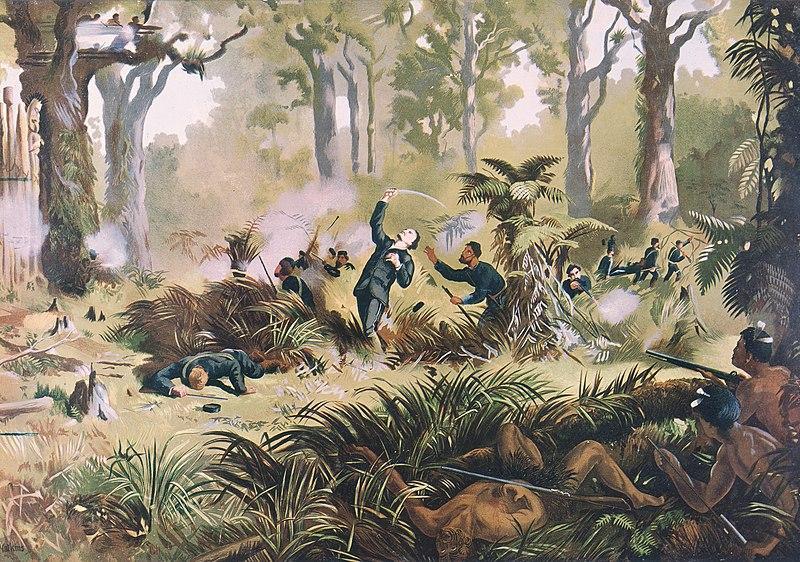
The Death of Von Tempsky at Te Ngutu o Te Manu. William Potts 1893.
Background Information: The New Zealand Wars were a series of armed conflicts that took place in New Zealand from 1845 to 1872 between the Colonial government and allied Māori on one side and Māori and Māori-allied settlers on the other. Though the wars were initially localized conflicts triggered by tensions over disputed land purchases, they escalated dramatically from 1860 as the government became convinced it was facing united Māori resistance to further land sales and a refusal to acknowledge Crown sovereignty.
According to the background information what issues were at the heart of the conflict known as the New Zealand Wars?
Who do the individuals in the image above represent?
Hypothesise on why the Māori would benefit from knowledge of the land.
What circumstances led to the New Zealand Wars?
STATION 6
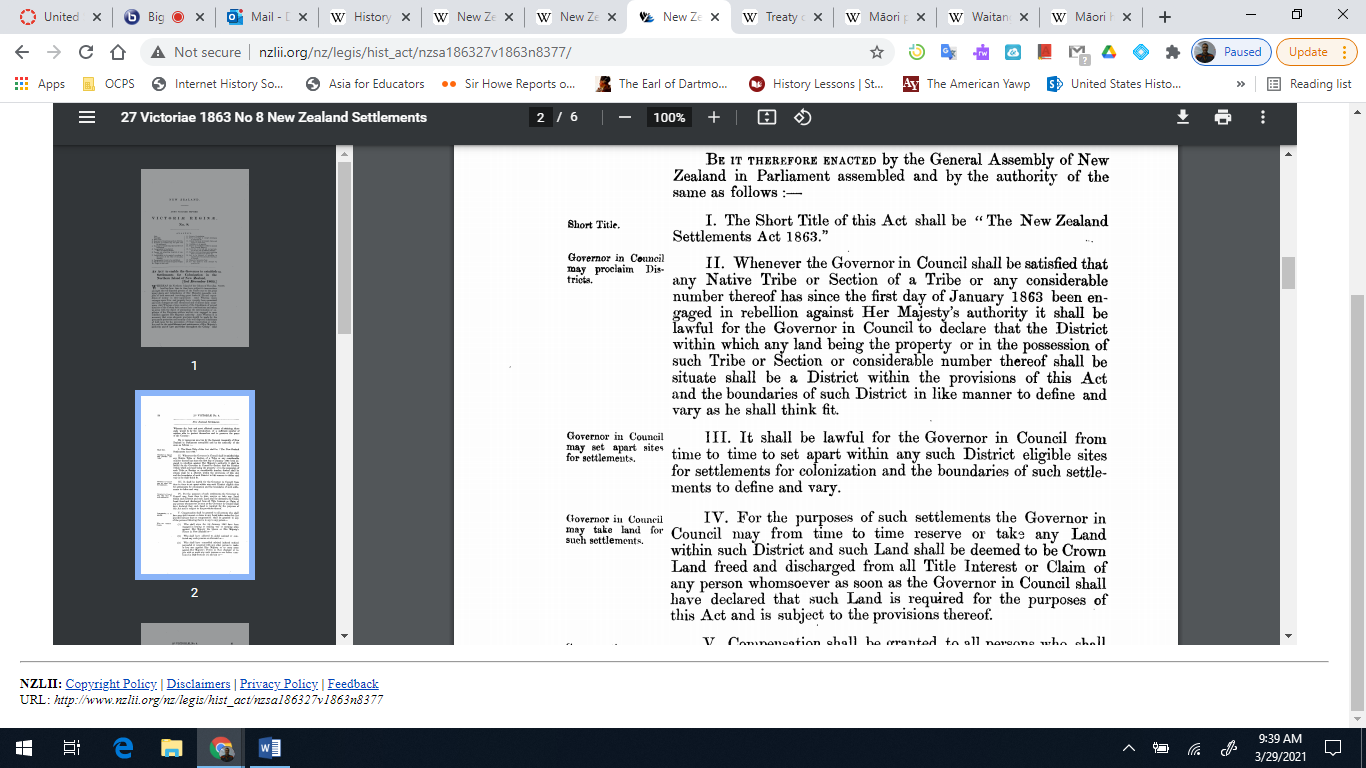
New Zealand Settlements Act 1863.
Background Information: This law, passed in December 1863, allowed for the confiscation of land – without compensation – from any North Island tribe said to be ‘in rebellion against Her Majesty’s authority’.
What is being said in the document above?
What events led to the New Zealand Settlements Act of 1863?
Who does the New Zealand Settlements Act benefit? Elaborate.
Hypothesize on if passing this Act would decrease/increase hostilities with the Māori? Explain your response.
STATION 7
Treaty of Waitangi Act 1975
Background Information: The Treaty of Waitangi Act 1975 established the Waitangi Tribunal. The Tribunal was empowered to investigate possible breaches of the Treaty of Waitangi 1840 by the New Zealand government or any state-controlled body, occurring after 1975. Most of the significant breaches of the Treaty, such as land confiscation in the New Zealand Wars, had occurred in the nineteenth century, and the Tribunal was powerless to investigate these
Section 6: Jurisdiction of Tribunal to consider claims
(1) Where any Maori claims that he or she, or any group of Maoris of which he or she is a member, is or is likely to be prejudicially affected—
(a) by any ordinance of the General Legislative Council of New Zealand, or any ordinance of the Provincial Legislative Council of New Munster, or any provincial ordinance, or any Act (whether or not still in force), passed at any time on or after 6 February 1840; or
(b) by any regulations, order, proclamation, notice, or other statutory instrument made, issued, or given at any time on or after 6 February 1840 under any ordinance or Act referred to in paragraph (a); or
(c) by any policy or practice (whether or not still in force) adopted by or on behalf of the Crown, or by any policy or practice proposed to be adopted by or on behalf of the Crown; or
(d) by any act done or omitted at any time on or after 6 February 1840, or proposed to be done or omitted, by or on behalf of the Crown, — and that the ordinance or Act, or the regulations, order, proclamation, notice, or other statutory instrument, or the policy or practice, or the act or omission, was or is inconsistent with the principles of the Treaty, he or she may submit that claim to the Tribunal under this section.
What is the main purpose of the Treaty of Waitangi Act 1975?
Does this Act address the complicated, and often hostile, land acquisition that has occurred in New Zealand?
What is a limitation of this Act?