4 March - 10 March
Section outline
-
Enter text here...

EXPLORE / TŪHURA learning intentions:
- We are EXPLORING past events, experiences and actions and the changing ways in which they have been interpreted over time.
- We are UNDERSTANDING how the Treaty of Waitangi is responded to differently by people in different times and places.
- We are UNDERSTANDING how the ideas and actions of people in the past have had a significant impact on people's lives.
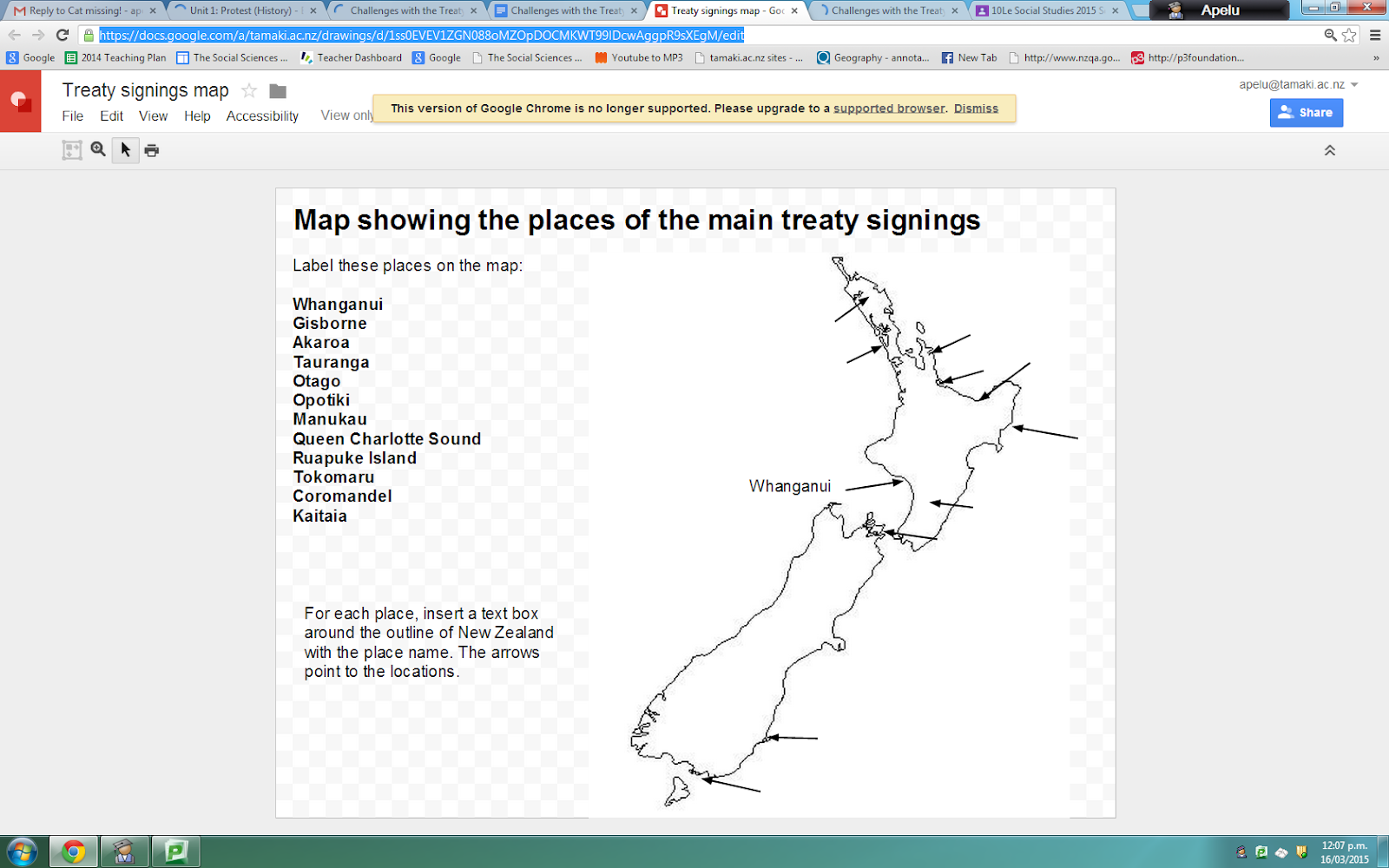
The map is on Google Classroom, complete there.
1. Give three facts about where the treaty was signed. For example: Most signings took place on the coast
2. The treaty signing is an example of the ways in which past events influenced relationships between groups involved in those events.
Why is it called a ‘past event’?
Which two groups signed the treaty?
Which group was the indigenous or native group of NZ?
Which group was from another country?
Was the treaty a written or an oral (word of mouth) treaty?
Was the treaty written in English, or in Maori, or in both languages?
Did the treaty mean the same to both groups? Give a reason for your answer.
3. Look at the reasons chiefs signed the treaty. Include Nopera Pana-kareao. Choose a reason and prepare a short talk about why you, as a very important chief, signed.
Analysing the Treaty.
1. Define the key words underlined in the text below.
2. After reading the two versions of the Treaty, discuss the key differences in each article.
Official English text of the Treaty of Waitangi
The Maori version: Te Tiriti o Waitangi
First article: Maori to give up complete sovereignty to Britain.
Maori to give up governorship (kawanatanga)
Second article:
-Maori are guaranteed ‘lands, estates, forests, fisheries and other properties’.
- British have pre-emptive right to buy Maori land that is offered for sale.
-Maori have full chieftainship (rangatiratanga) of their lands, villages and possessions.
- If Maori wanted to sell their land they had to first offer it to the British at an agreed price. If British did not agree, land could then be sold to someone else.
Third article:
- Maori have the same rights as British subjects.
- The British will protect them. They have the same rights as British subjects.
Overall impression:
’It appears that Maori were left with the impression that there would be a sharing of power between Maori and European, an arrangement that would leave a substantial degree of authority in Maori hands’. -Historian, Dr Claudia Orange.
3. Look at the reasons chiefs signed the treaty. Include Nopera Pana-kareao. Choose a reason and prepare a short talk about why you, as a very important chief, signed.