
26 June - 2 July
Section outline
-
Kia ora 7C2,
Thank you to everyone who had uploaded your assessment. Any assessments not uploaded by the start of session 4 today, will be graded as late.

Today will be optional oral presentations, before I start grading your static images. You can choose to present your work orally, if you would like to clarify any part of your static image.
Continuation/discussion of Matariki activities.

Our focus for this week is MATARIKI. Please refer to our Google Classroom for resources.
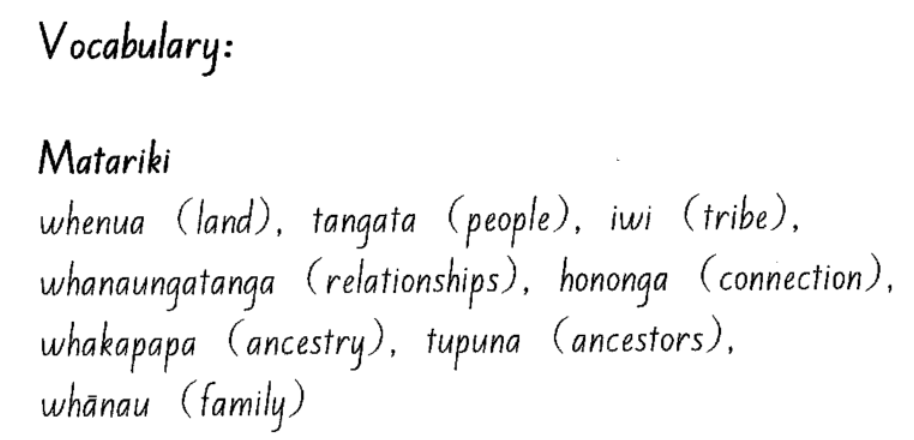
Please copy the following vocabulary into your Global Studies books.
What is Matariki?
Matariki is one of the most important Māori celebrations. It signifies the start of the New Year in Māori culture.
Matariki is the name for a star cluster also known as the Pleiades, that rises in late June or early July. It literally translates in English to the 'eyes of god' or 'little eyes'.
Usind the Matariki Handbook attached below, write down 5 facts in your book about Matariki ?

When is Matariki?
In 2023 Matariki will be celebrated on the 14 July.
How is Matariki celebrated?
Traditionally, Māori believed if the Matariki stars were very bright in the sky, this signified a warmer season and more fruitful crops for harvest.
It was seen as an ideal time for ceremonial offerings to the Māori land-based gods Rongo, Uenuku and Whiro to ensure their crops were healthy for the coming year. Matariki was also seen as an important time for family to gather and reflect on the past and the future.
Today Matariki celebrates the unique place in which we live and gives respect to the land we live on. This is celebrated through education and remembering whakapapa (ancestry).
The planting of new trees and crops is done to represent new beginnings.
Celebrations traditionally last up to 3 days after the new moon has risen following the Matariki clusters visibility in the sky.
What are the Matariki stars called?
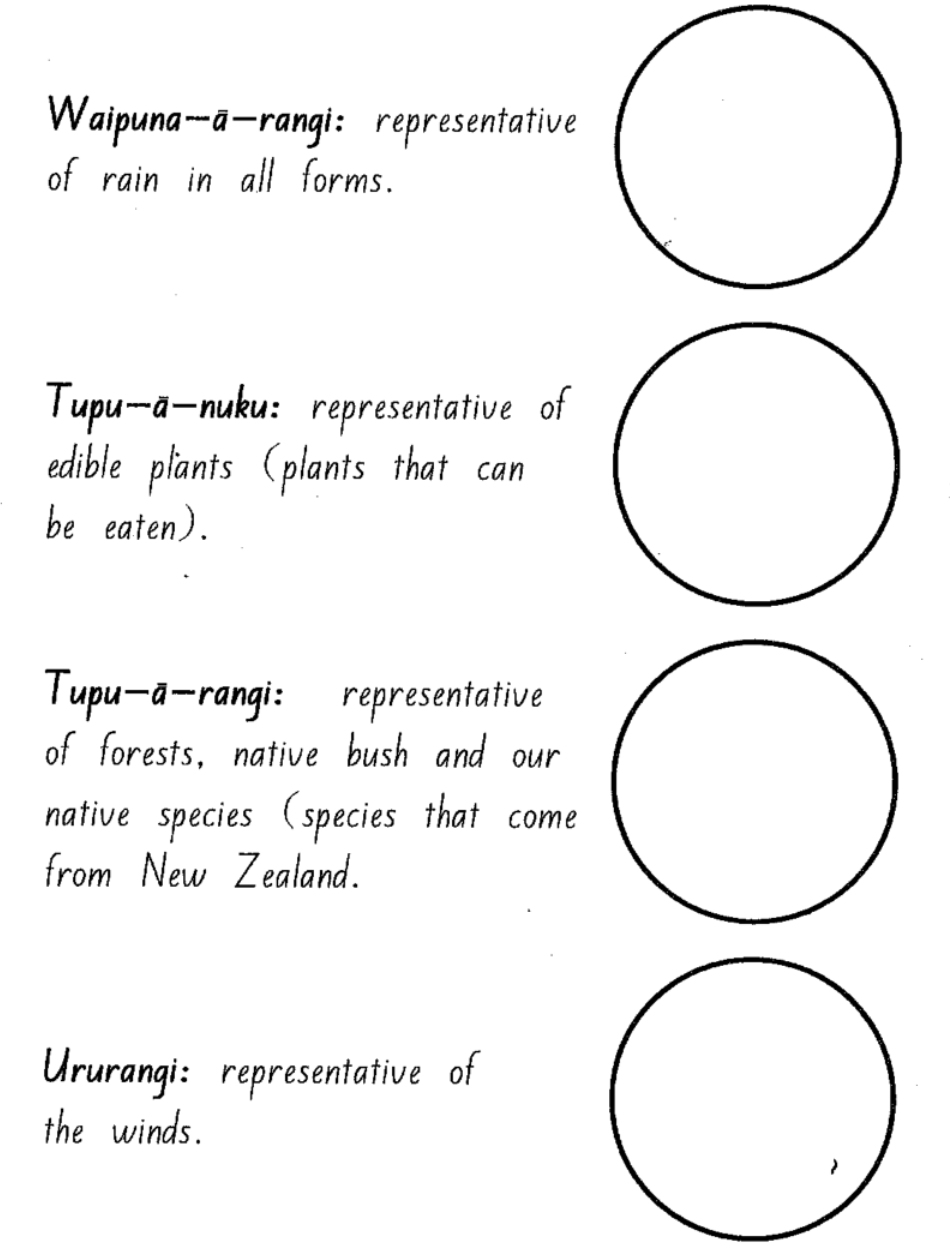
Matariki is a star cluster, not a constellation. The 9 Matariki stars are called:
- Hiwa-i-te-rangi
- Matariki
- Pohutukawa
- Tupu-a-nuku
- Tupu-a-rangi
- Ururangi
- Waipuna-a-rangi
- Waiti
- Waita
Please complete the following activity in your Global Studies book:


Watch the video below to learn more about Matariki.
Please refer to our Google Classroom for additional resources.
7C2 Google ClassroomEarly finishers : Matariki Reading Activity on Google Classroom