Section outline

  • Te kāhui o Matariki–The constellation of Matariki


    The ever-alert and protruding eyes of Matariki

    “The ever-alert and protruding eyes of Matariki”
    This whakataukī is about the story of Tāwhirimātea (remember the separation of Papatūānuku and Ranginui and how their children fought and Tāwhirimātea tore out his own eyes in a fit of rage and threw them to the sky). His whakataukī is said about a person who is alert at night.
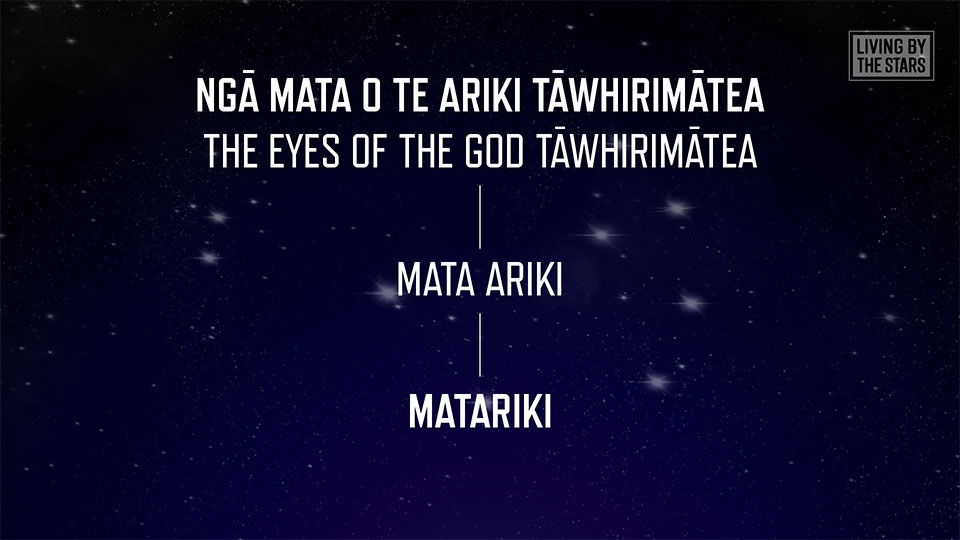
    Tawhirimatea
    Image: Ngā mata o te ariki Tāwhirimātea ©Living by the Stars

    The night sky offers a wealth of seasonal and celestial wisdom told by the stories of the stars. Matariki is short for Ngā Mata o te Ariki Tāwhirimātea (the eyes of Tāwhirimātea, the God of winds and weather). Tāwhirimātea is a son of Ranginui and Papatūānuku. He was so enraged by his parents' separation that he fought his siblings until he lost. In a fit of anger, he tore out his own eyes and threw them into the sky. This story reminds us of the close connection between sky and Earth and the importance of observation.

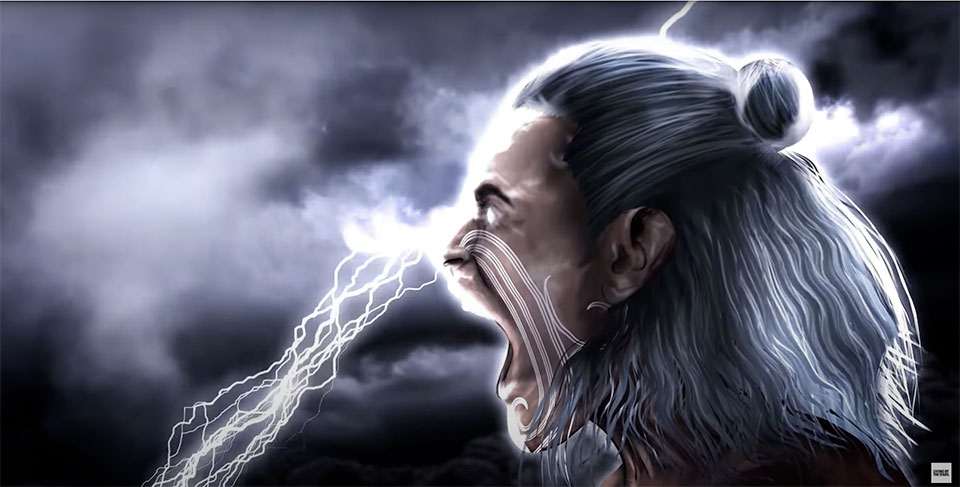
    Tawhirimatea drawing 1

    Tawhirimatea drawing 2
    Images: Tawhirimātea, ©Living by the Stars.

    Stories are a good way of remembering and understanding useful information. Each Matariki star tells a story about seasonal changes like when to plant, harvest, hunt, fish, build, travel, celebrate, reflect, and recite karakia. This information connects us to the seasons and our environment.

    The stars of Matariki are represented by a whānau of personalities and qualities.
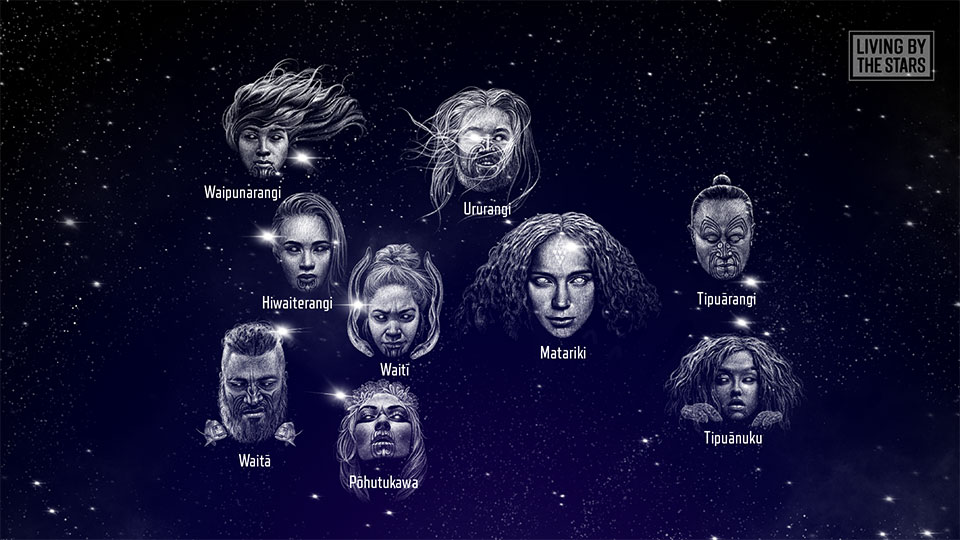
    Matariki constellation, ©Living by the Stars
    Matariki constellation, ©Living by the Stars.
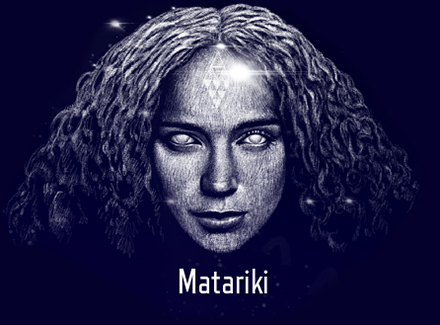
    Matariki star.

    Matariki – the brightest star, and the whole cluster of stars. Matariki is the mother of the stars and maintains their wellbeing and balance.
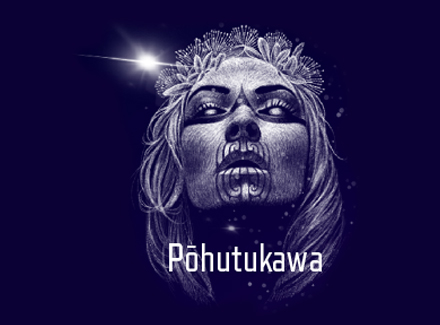
    Pōhutukawa star.

    Pōhutukawa is associated with the dead, especially those who have died during the past year. Many hapū and iwi have different stories about the spiritual journeys of the dead. One of these stories tells of the connection between the Pōhutukawa tree and the star. Departing spirits travel to Te Rerenga Wairua, in the north of the North Island, where ancient Pōhutukawa grow along the cliff. Spirits descend to the roots and are released to the Pōhutukawa star before Matariki rises.
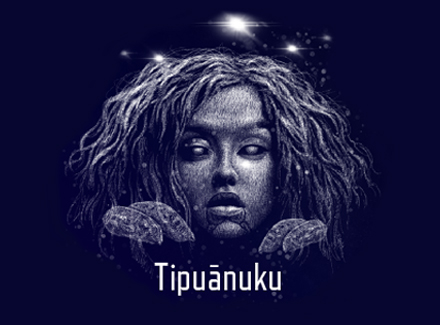
    Tipuānuku star.

    Tipuānuku is connected to food grown in the earth. Tipu means to grow, and nuku is from Papatūānuku.
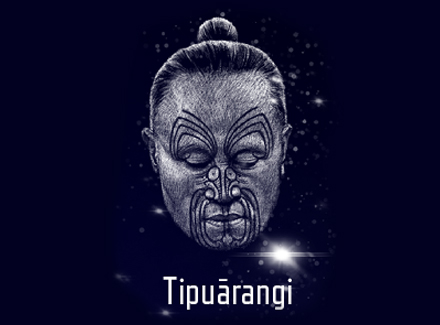
    Tipuārangi star.

    Tipuārangi refers to food from above. This was once a time when full-bellied kererū were caught and preserved for the year ahead.
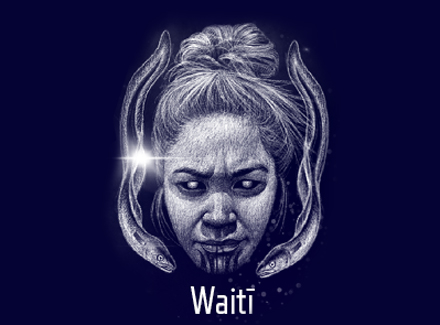
    Waitī star.

    Waitī is associated with freshwater including animals which live, feed, or drink in rivers, streams, and lakes. This is also when some ocean fish begin the journey up freshwater streams to spawn.
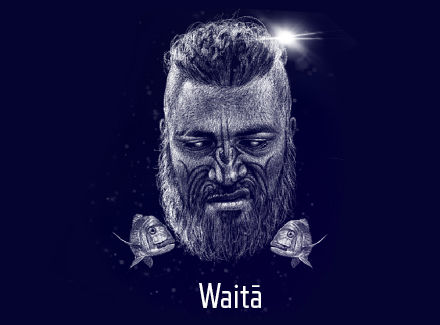
    Waitā star.

    Waitā is associated with ocean life, including tides and floodwaters. Matariki rising above the water horizon influences tides and floods.
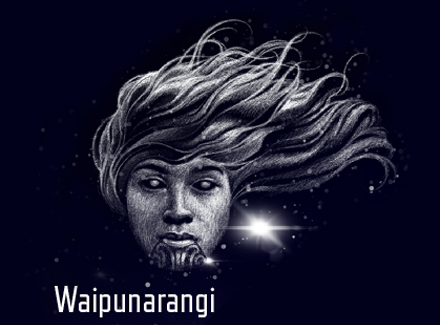
    Waipunarangi star.

    Waipunarangi is linked to rain and refers to pools of water in the sky. This is the season of heavy rain.
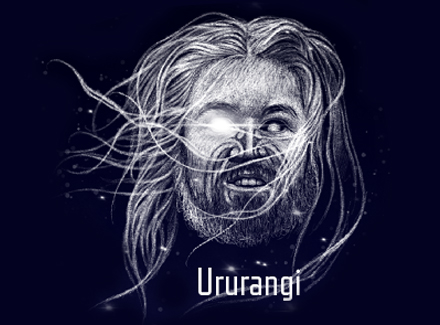
    Ururangi star.

    Ururangi means wind of the sky, another element of the season.
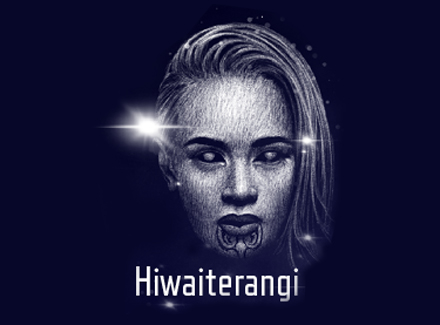
    Hiwaiterangi star.

    Hiwaiterangi is associated with good luck and prosperity. Hiwa means vigorous growth which is the subject of many hopes. This is the star for wishes and resolutions.

    The science of observation, experimentation, and practice are embedded in the stories of the night sky. For Matariki this observation means it is the season for fires and keeping warm, or donning wet weather gear and enjoying the wind and rain represented by Ururangi and Waipunarangi.


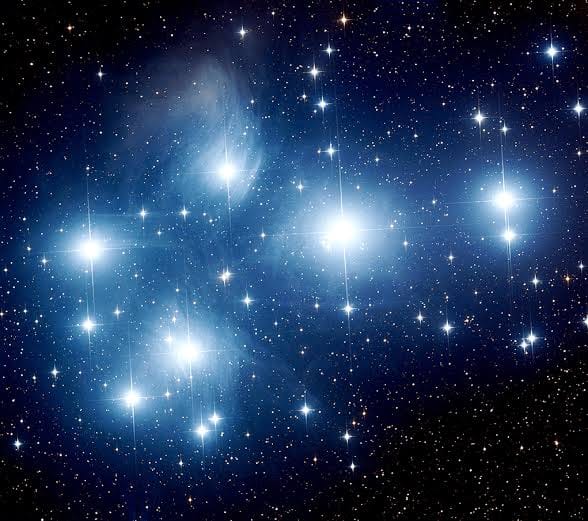
    The Nine Stars of Matariki 

    Many have come to believe there are in fact nine stars that form Matariki. The stars, rather than being viewed  as a whole, are seen as individuals. Each star holds influence over the environment in a unique way and a study  of the stars can bring insight to the year ahead. The stars are in balance with one another and each is positioned  significantly. 


    The Nine Stars of Matariki 

    1. Matariki (Alcyone) 

    I am a star that signifies reflection of time past. I represent a connection to the  environment and herald a time for people to gather together. I am a symbol of  hope and encourage your connection with the environment and with each other. 

    2. Pōhutukawa (Sterope/Asterope) 

    I am the star that cradles the memories of those loved ones that we have lost. I  am a symbol of connection to the past and to the ancestors who have gone before  us. I sit away from those associated with food to preserve the noa of the kai.  Look upon me and remember and acknowledge those who have led you on the path  you are on. 

    3. Waitī (Maia) 

    I am the star that shines for all sources of fresh water and the life within. I  shine for ngā awa, ngā roto, ngā kūkūwai and ngā waipuna. When I shine bright,  the waters will sustain land and man alike. 


    4. Waitā (Taygeta) 

    I am the star that symbolises all sources of salt water as well as those that  dwell within it. I discover new life within these waters even after all this time.  Te Moana-nui-o-Kiwa and Te Tai-o-Rehua are filled with a wonder of plant  life, whāngote and ika. Respect, preserve and protect our coasts and oceans and  the ocean dwellers for they are a great taonga. 


    5. Waipuna-ā-rangi (Electra) 

    I am the star associated with life-giving rain in all forms – ua nganga (hail),  hukarere (snow), haupapa (sleet), pūroro (driving rain) and hāuaua and everything  in-between. The healthy cycle of the earth is reliant on the arrival of the rains  and at the mercy of the waters from the sky. 

    6. Tupuānuku (Pleione) 

    I am the star with an interest of all that grows in the ground that can be  harvested, gathered and used as sustenance. Well-nourished, and sustaining soil is  essential to all that grows. Honour Papatūānuku with your plantings, plant only  those which you need and tend them well.


    7. Tupuārangi (Atlas) 

    I am the star that is linked with the trees, forests, fruits, berries and birds.  I associate with the realm of Tānemahuta. Our native forest dwellers – ngā  manu, ngā mokomoko, ngā ngārara and ngā kararehe need our protection as  do our mighty rākau. Your role in their preservation is to act as kaitiaki. 

    8. Ururangi (Merope) 

    I am closely tied with the moods of Tāwhirimatea and te whānau puhi. Hauraro, Tonga,  Hauāuru and Marangai can cool you on a day when Tamanuiterā is sending forth his intense  heat and they can bring destruction and challenge when Tāwhirimatea commands a storm. 


    9. Hiwaiterangi/Hiwa (Celaeno) 

    I am the star to be wished upon. I am the youngest star of the nine and  represent the hopes and aspirations to be carried forth to the coming year. Along  with Pōhutukawa, I represent a status of the sacred and tapu and, therefore, sit  apart from those stars that represent aspects of kai and sustenance. Hold fast to  your dreams and aspirations and focus on those pathways that will lead you in  those directions.  


    Matariki te whetū o te tau–Matariki the star of the year


    Star of the year graphic

    “Matariki appears as Whānui flees; this is the sign of the New Year.”
    A whakatauki from the book Matariki, The star of the year, by Dr Rangi Matamua. This whakataukī is about Whānui, the star Vega in the constellation of Lyra. It is one of the brightest stars and sets in the north in the early winter morning before Matariki rises in the north-east.

    LEARNZ kaiārahi Jamie talks about Matariki with Dr Rangi Matamua:

    Matariki in the southern sky

    Matariki is a whetū (star) cluster. It can be seen from most places on Earth. Matariki is also the name of the brightest star in the cluster. You can see between five and nine stars in the cluster without a telescope. There are as many as 500 stars in the cluster. They are about 440 light years away. One lightyear is 9.46 trillion kilometres.

    Matariki stars
    Image: Matariki, ©Living by the Stars.

    Matariki can be seen all year except from around Haratua/Pipiri (May/June) when it sets with the sun. It rises again before dawn around Pipiri/Hongongoi (June/July). The reappearance of Matariki is the beginning of the Māori New Year in the cold months of takurua (winter).

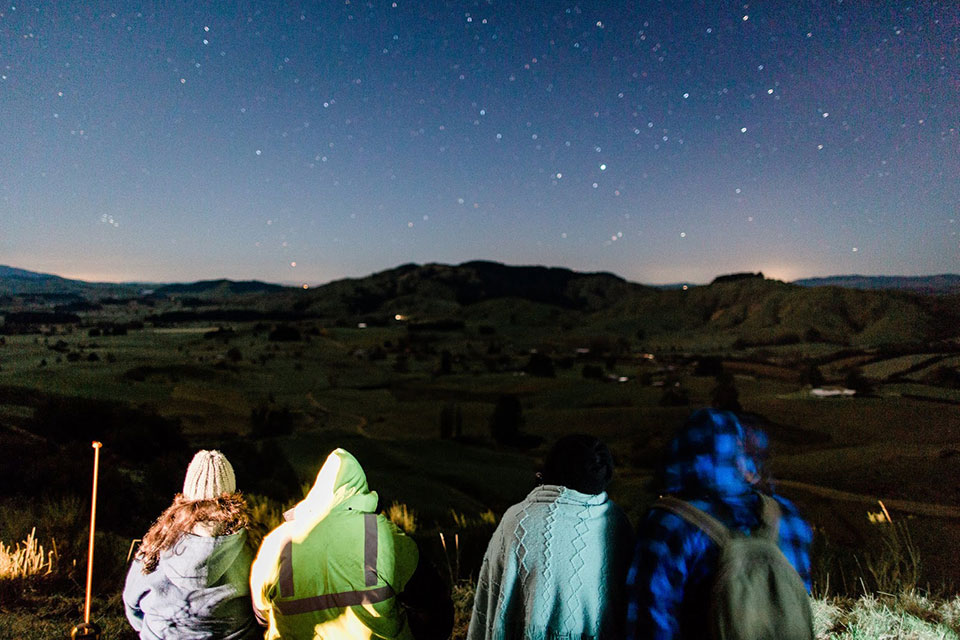
    Observing the rising of Matariki, ©Living by the Stars
    Image: Observing the rising of Matariki, ©Living by the Stars.

    Maramataka Māori

    The maramataka is the Māori lunar stellar calendar. Te Marama (the Moon) influences tides, fishing, planting, animals, and people. The maramataka refers to the Moon’s orbit around the Earth in relation to the Sun and stars. The word stellar refers to the stars and lunar refers to the Moon.

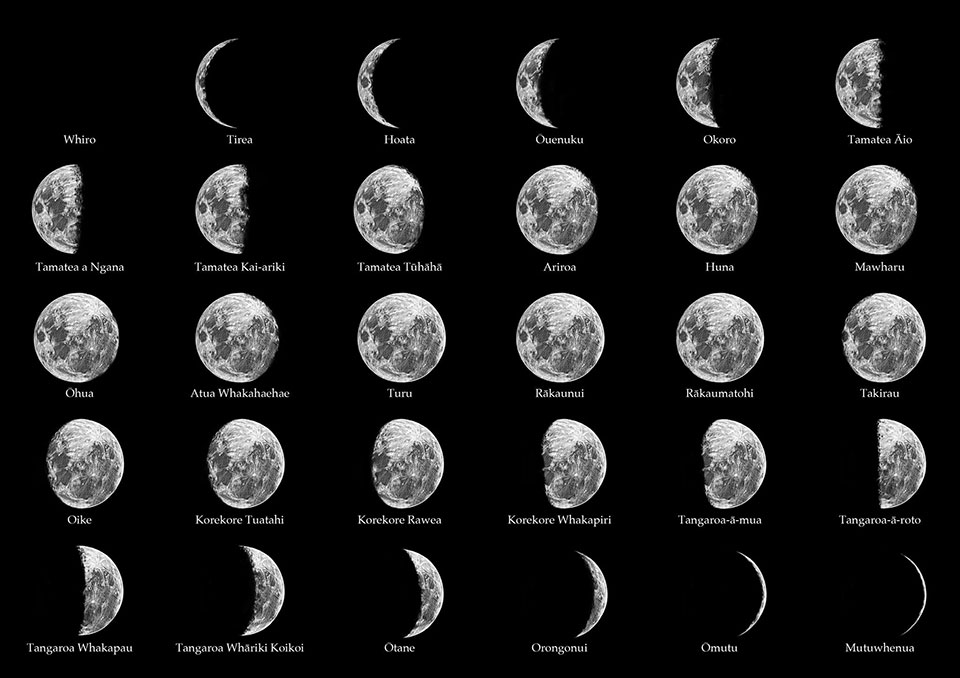
    Māori have developed a comprehensive calendar that names and describes each night of the waxing and waning Moon. This knowledge is from observing lunar phases and environmental changes over lifetimes and generations.

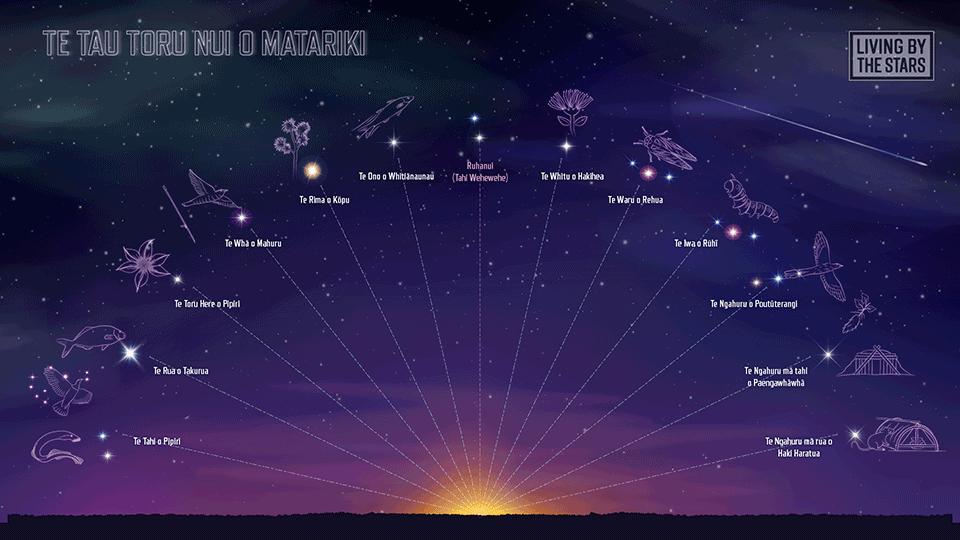
    Te Tau Toru Nui o Matariki, ©Living by the Stars.
    Image: Te Tau Toru Nui o Matariki, ©Living by the Stars.

    Solar and lunar calendars

    The calendar with months from January to December is called the Gregorian calendar, which replaced the Julian calendar in 1752. The Julian calendar began in ancient Rome over 2000 years ago. Both the Julian and Gregorian calendars track the Earth's orbit around the Sun. Early settlers to Aotearoa brought the Gregorian calendar along with days of the week named after Norse gods.

    In the Gregorian calendar (European solar calendar) there are 365 days most years. An adjustment is made every fourth year by adding one day at the end of February to align with the movement of the sun. This is a leap year.

    The lunar calendar is another way of measuring time through the seasons. Calculating the lunar cycle requires an understanding of rising and setting stars, Moon, planets, and Sun.

    Moon phases, ©Living by the Stars.
    Image: Moon phases, ©Living by the Stars.

    Moon maths

    Maramataka is based on 12 lunar months of 29.5 nights each, within one solar orbit. This is during the time it takes for Earth to travel once around the Sun. Maramataka months begin with the night of the new moon. 12 months x 29.5 nights = 354 nights.

    The solar calendar is based on one Earth orbit around the Sun, divided by twelve months. Each month starts at different times of the lunar phase. All solar months have 30 or 31 days, except February.
    365 days / 12 months = 30.4 (average)

    There is a difference of 11 days between the lunar and solar annual calendars. One night is added every so often to account for this difference . An extra month is also added every three years to synchronise the two calendars. The total number of lunar months over three years is 12 + 12 + 13= 37.

    Every year, the date that Matariki is celebrated changes. This is because Matariki is observed by the cycle of the moon and this doesn’t align with the months of the Gregorian Calendar.

    LEARNZ kaiārahi Jamie asks Dr Rangi Matamua why the dates for Matariki are different every year:


    Matariki ahunga nui–Matariki provider of plentiful food


    Matariki and hospitality

    “The great mounds of Matariki”
    This whakataukī is about Manaakitanga (hospitality and respect), coming together and sharing the kai (food). This refers to kai which is stored and shared during Matariki.

    Whakataukī are proverbs or sayings which provide insight into our social and natural world. There are many whakataukī that refer to Matariki. This is because it is such a significant time of year. Rangi shares two important Matariki whakataukī and what they mean:

    Image: Hautapu, ©Living by the Stars

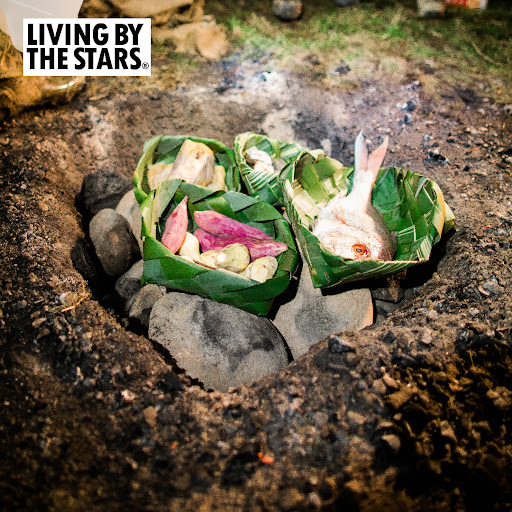
    Kai (food) is an important part of Matariki celebrations. Kai, represented by the stars Tipuānuku, Tipuārangi, Waitī, Waitā, is cooked in a ceremonial oven called te umu kohukohu whētu (earth oven of the stars).

    Image: Hautapu, ©Living by the Stars

    Rangi shares with Jamie how kai represents different elements and atua and is therefore an important part of the Matariki celebration:

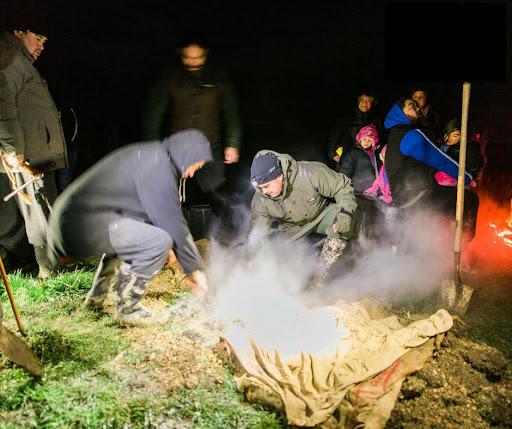
    The steam created from cooking this kai is called hautapu which is a sacred offering to Matariki. The ritual ends when the sun rises.

    Image: Feeding the stars, ©Living by the Stars.
    Image: Feeding the stars, ©Living by the Stars.

    Jamie and Rangi talk about how hautapu–the offering of food to atua (gods), as a way of giving thanks: