
10 May - 16 May
Section outline
-
how do different groups of people participate individually and collectively in response to community challenges?
This week we will continue our investigation into the Amazon Rainforest in Brazil.
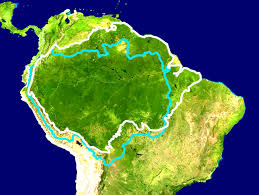
In week 2 we will aim to achieve two things.
1. to recognise and identify the main causes for deforestation in the Amazon and what motivates these causes.
2. to use some of our key concepts to explain how deforestation has both environmental and social impacts on a local and global scale.

WALT...
- describe the pathway of learning we intend to follow in order to deepen our understanding of our learning context in Global Studies.
- explain how the learning context for this term will be engaged with in Global Studies
- identify and define a range of key concepts about rainforests
- identify and define a range of key concepts about deforestation
- locate some of the world's rainforests on a map.
By learning this, you will know how to:
- organise and plan a learning pathway effectively.
- discuss different ideas and issues to do with rainforests and deforestation
- locate the Amazon rainforest on a map/globe
- apply and use key ecological concepts to a real-world context
Concept of the Week - Habitat
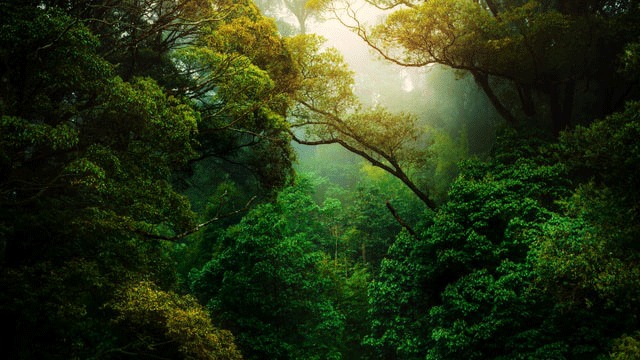
A habitat is a place where an organism makes its home. A habitat meets all the environmental conditions an organism needs to survive. For an animal, that means everything it needs to find and gather food, select a mate, and successfully reproduce. For a plant, a good habitat must provide the right combination of light, air, water, and soil. For example, the prickly pear cactus, which is adapted for sandy soil, dry climates, and bright sunlight, grows well in desert areas like the Sonoran Desert in northwest Mexico. It would not thrive in wet, cool areas with a large amount of overcast (shady) weather, like the U.S. states of Oregon or Washington.
For more on habitats click here
The main components of a habitat are shelter, water, food, and space. A habitat is said to have a suitable arrangement when it has the correct amount of all of these. Sometimes, a habitat can meet some components of a suitable arrangement, but not all. For example, a habitat for a puma could have the right amount of food (deer, porcupine, rabbits, and rodents), water (a lake, river, or spring), and shelter (trees or dens on the forest floor). The puma habitat would not have a suitable arrangement, however, if it lacks enough space for this large predator to establish its own territory. An animal might lose this component of habitat—space—when humans start building homes and businesses, pushing an animal into an area too small for it to survive.Case Study 2: Deforestation
watch the clip carefully and discover the answers for the questions below, record your answers in your Global Studies book.
Introduction to Deforestation
How much of the planet is covered in forests?
With the current rates of deforestation, in how many years will the worlds rainforests disappear
How much of a contribution to climate change is made by Forestry and Agriculture?
What two events happen in the process of deforestation that has a negative impact on our climate?
Forests provide habitat (homes) for what percentage of life on Earth?
How many people rely on Forests for food and shelter?
What is the biggest driver of deforestation?
What is “urban sprawl”?
