
3 May - 9 May
Section outline
-
Tena koutou katoa,
Welcome back for Term 2 7F1!
Our learning context this term is Te Hā o te Wao Nui a Tāne - which basically means: 'the breath of Tāne'.In terms of the Global Studies focus this term, the big idea in the background of what we will be learning and thinking about this term is:
how do different groups of people participate individually and collectively in response to community challenges?
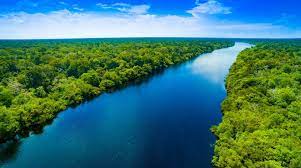
First, we will explore these ideas by looking at the ongoing disappearance of the Amazon Rainforest in Brazil. Here we will examine how different individuals and communities have tried to address the impact of deforestation on their environment.
In week 1 we will aim to achieve two things.
1. Understand the learning pathway we will follow and how it connects to our learning context.
2. Develop our understanding of some key concept-words that we will be engaging with this term.
For this week and the next:
WALT...
- describe the pathway of learning we intend to follow in order to deepen our understanding of our learning context in Global Studies.
- explain how the learning context for this term will be engaged with in Global Studies
- identify and define a range of key concepts about rainforests
- identify and define a range of key concepts about deforestation
- locate some of the world's rainforests on a map.
By learning this, you will know how to:
- organise and plan a learning pathway effectively.
- discuss different ideas and issues to do with rainforests and deforestation
- locate the Amazon rainforest on a map/globe
- apply and use key ecological concepts to a real-world context
Concept of the Week - Biodiversity
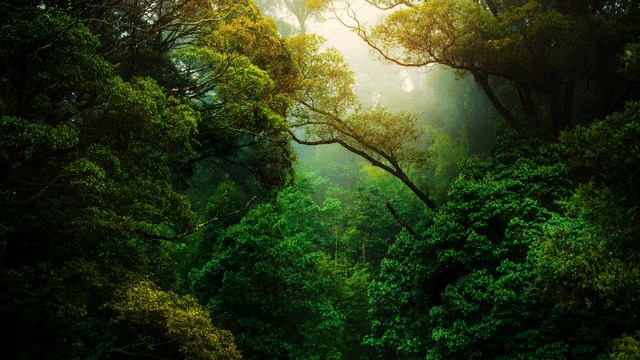
Biodiversity is a term used to describe the enormous variety of life on Earth. It can be used to refer to all of the species in one region or ecosystem. Biodiversity refers to every living thing, including plants, bacteria, animals, and humans. Scientists are interested in how much biodiversity there is on a global scale, given that there is still so much biodiversity to discover. They also study how many species exist in single ecosystems, such as a forest, grassland, tundra, or lake.
A single grassland can contain a wide range of species, from beetles to snakes to antelopes. Ecosystems that host the most biodiversity tend to have ideal environmental conditions for plant growth, like the warm and wet climate of tropical regions. Ecosystems can also contain species too small to see with the naked eye. Looking at samples of soil or water through a microscope reveals a whole world of bacteria and other tiny organisms. Some areas in the world, such as areas of Mexico, South Africa, Brazil, Aotearoa-New Zealand, the southwestern United States, and Madagascar, have more biodiversity than others.
All of the Earth’s species work together to survive and maintain their ecosystems. For example, the grass in pastures feeds cattle. Cattle then produce manure that returns nutrients to the soil, which helps to grow more grass. This manure can also be used to fertilise cropland. Many species provide important benefits to humans, including food, clothing, and medicine. Much of the Earth’s biodiversity, however, is in jeopardy due to human consumption and other activities that disturb and even destroy ecosystems. Pollution, climate change, and population growth are all threats to biodiversity.
For more on biodiversity click here
Case Study: what defines a forest as a rainforest?
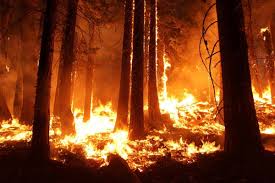
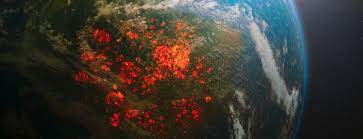
Our first case study will take us to the Amazon Rainforest where we will be investigating the recent fires that are threatening to destroy unique animal and plant life that cannot be replaced. These fires also threaten to destroy the homes of the indigenous communities who have lived there for 1000's of years.
Homework: Rainforests 101
Your first independent study is the homework for this week and looks at what 'Rainforests' are. You will need to watch the clip below titled "Rainforests 101"; and then, use the relevant information from the clip to answer the following questions in your Global Studies Book - head up the page 'Introduction to Rainforests'.
How old are the oldest rainforests?
What kind of rainforests do we have in NZ?
What kind of rainforest is the Amazon?
What is the main difference between temperate and tropical rainforests?
What percentage of the planet’s breathable air is created by rainforests?
