
1 March - 7 March
Section outline
-
An example of a classification key.

An example of an ecosystem.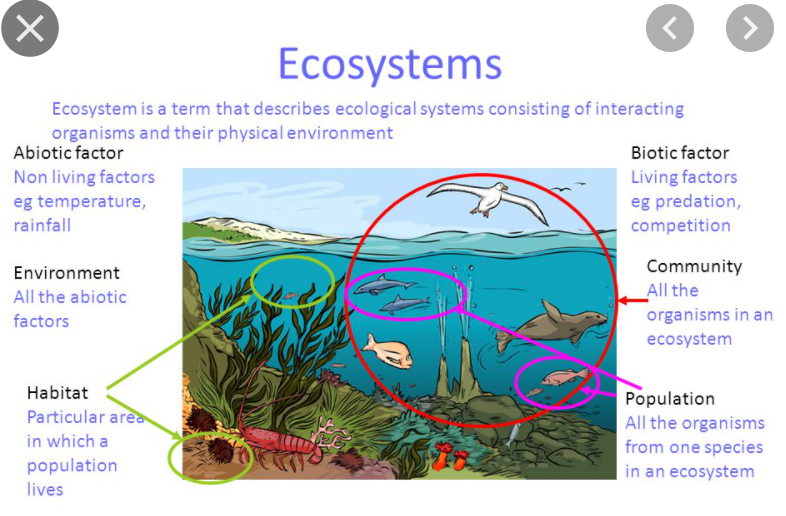
Kia ora 9C2,
Our context is relationships, The ME in Team!
Big IdeaThis term, across your learning areas, you will be developing your interpersonal skills and learning about leadership, and the role people play in a team or community group.
In time, you will be identifying a community issue and solving the following problem: how do we teach the community about how we can work together to find a solution for the community issue?
Our value is pono, integrity

EXPLORE / TŪHURA learning intentions:
- We are EXPLORING...Life Processes by classifying and organising organisms based on their structural features.
Success Criteria: I can/have...
- outline why scientists classify organisms
- describe the 5 kingdoms of living organisms
- distinguish between vertebrates and invertebrates
- use simple keys to classify unknown organisms or objects.
- distinguish between ecosystems, communities and populations.
- define the term habitat and describe the habitats of a range of organisms.
Activities:
- Word list activity: write the words below into your 1B8 Science book. Please leave 2 lines between each word for the definition.

2. How do scientists classify (group or sort) all organisms on Earth? Complete the activities below to find out. SciPad pages can be found on Google Classroom. Challenge: Science is changing all the time...how many kingdoms are there now?
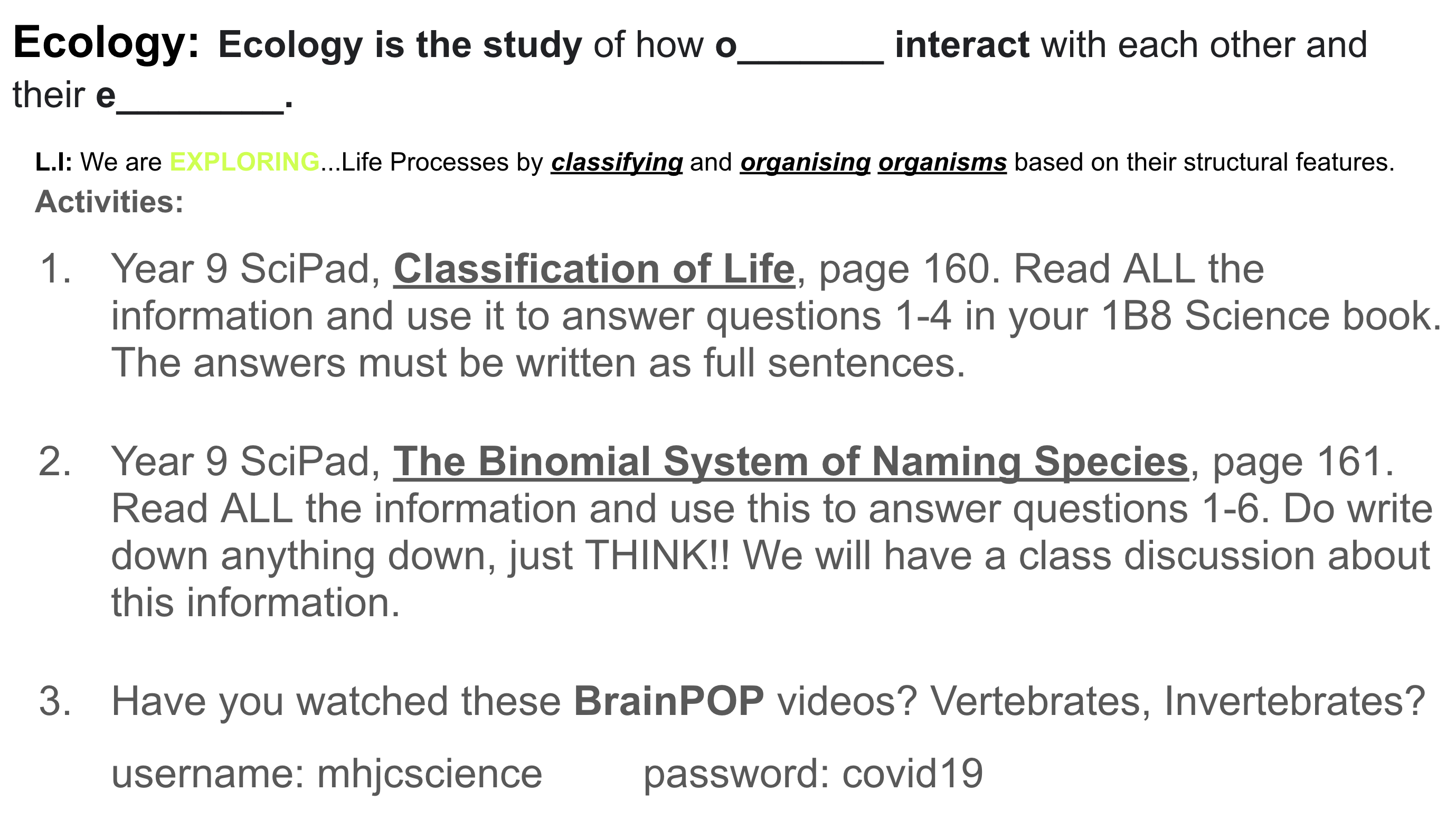
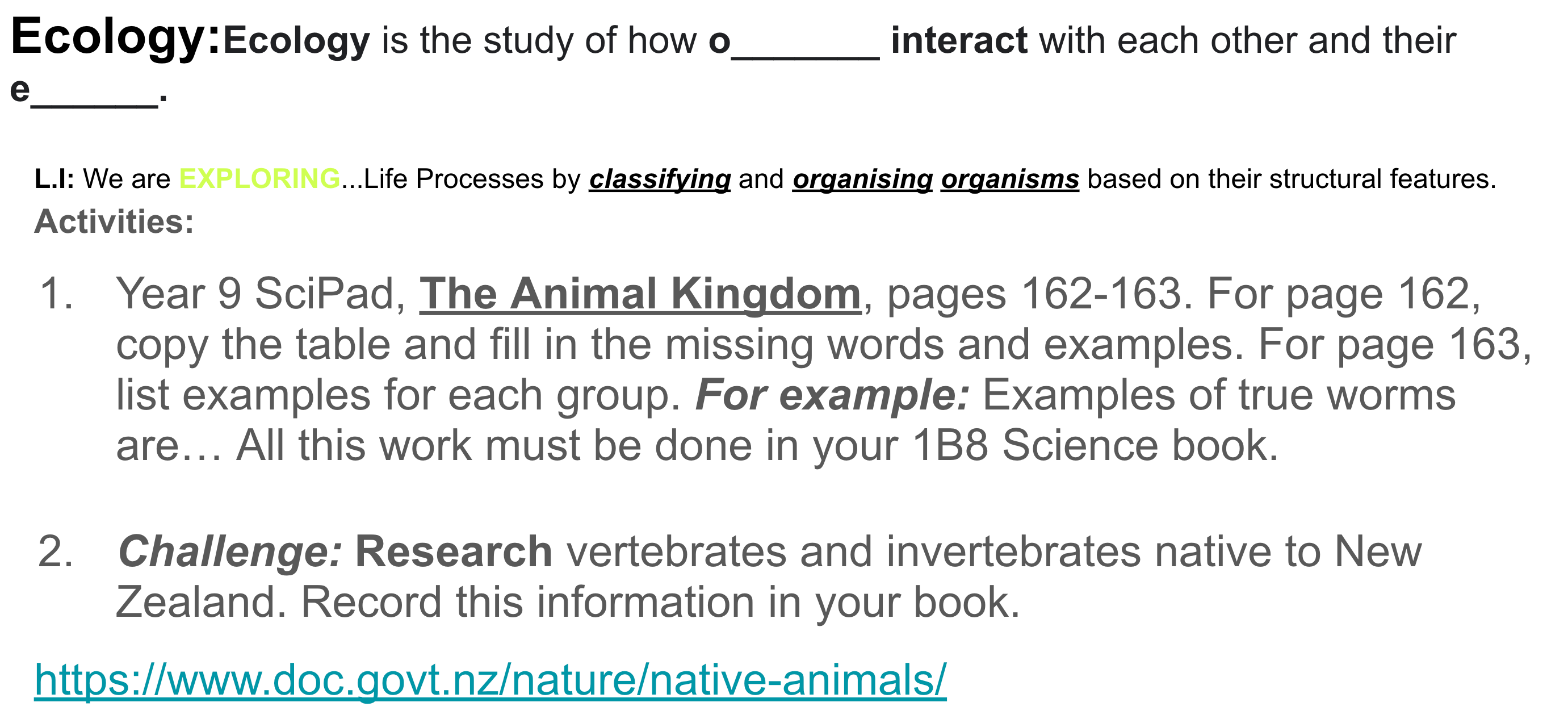
3. We are now going to focus on the Animal Kindgom. Please follow the instructions below. SciPad pages can be found on Google Classroom.
Google Classroom code: ckgtsap