
Term 2 Week 6 and 7
Section outline
-
Price
Determining the price of a product is an extremely important decision because it determines the amount of profit a business will earn from sales of their product.
Factors to consider:
- Costs of production: The price that the business charges must recover the costs of production in order to make a profit.
- Competitive conditions in the market: Demand and supply in the market needs to be considered. If demand for a product is high but supply is low, then a business can take advantage of the market conditions and charge a higher price in order to maximise profits. For example, petrol & oil. When supply in the market is low, petrol companies raise their prices.
- Competitors prices: The business will need to ensure that the price charged is reasonable compared to competitors products or they may lose sales to the competition.
- Stage of the product life cycle: The age of the product may have an effect on the price of a product. For some products like grocery items their price remains relatively constant unless market conditions change or the business runs some promotions etc. Other products (like technology), the price may lower over time due to newer, more advanced models entering the market.
- Price/Quality perceptions: It is also important as the chosen price may also create perceptions to consumers about the quality of the product. Consumers naturally perceive that high-priced products are also of a high quality and vice-versa. Thus, when choosing a price for its product, a business must be careful to choose a price that will fit the rest of the marketing mix and most importantly will appeal to its target market. The chosen price should complement the chosen brand image for the product.
- Pricing strategies for new products vs. existing products: For new products entering a competitive market some businesses may decide to charge a price lower than the competition to try and entice consumers who buy existing brands to possibly try their product and like it so that later in the products life cycle (as they gain regular customers) they may then increase their price. This is called a price penetration strategy.
Pricing Strategies
Cost-Plus Pricing
The business takes into account the cost of manufacturing the product and then adds on a profit mark-up. This can either simply cover costs or include an element of profit. It focuses on the product itself and does not take into account consumers’ expectations or perceptions. It is very easy to apply but the business may lose sales if their price is more than competitors.
Penetration Pricing
This is where the business sets the price lower than the competition to ‘penetrate the market.’ This is often useful when launching into a new or highly competitive market. It is typically used with mass market products – chocolate bars, food stuffs, household goods, etc. It is also suitable for products with long anticipated product life cycles.
Other benefits:
- Market share is quickly won.
- Encourages consumers to develop a habit of buying
- ‘Low’ price to secure high volumes
Price Skimming Strategy

This is where the business sets an initial high price for a unique product encouraging those who want to be ‘first to buy’ to pay a premium price. Later in the products life cycle they may then lower the price. It is usually used alongside a promotional campaign to create high demand for the new product before it is even launched. This strategy helps a business to gain maximum revenue before a competitor's product reaches the market. This is often used with technology products like mobile phones and devices.
Loss Leaders
This is where chosen goods/services are deliberately sold below cost to encourage sales elsewhere in the business. The business hopes that the purchases of other items more than covers ‘loss’ on item sold. It is typically used in supermarkets, e.g. at Christmas, selling bottles of coke at $0.99 in the hope that people will be attracted to the store and buy other products as well that will cover the loss made on the coke. Cell phones & contracts are another example.
Psychological Pricing.
This when particular attention is paid to the effect that the price of a product will have upon the consumers perceptions of the product. It may involve charging a very high price for a high quality product so that high income customers may wish to purchase it as a status symbol. E.g. Ferrari. Alternatively, it may charge a more reasonable or lower price so that consumers perceive it as an ‘affordable’, ‘value for money’ product.
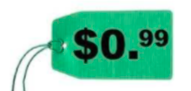 Another example of psychological pricing is selling products for $199 instead of $200 is also an example of psychological pricing as it creates the impression of being much cheaper.
Promotional Pricing
This is when products might be sold “on sale” or at a lower price for a short period of time. It includes “buy 1 and get 1 free” deals. It is useful for getting rid of unwanted stock. It could help renew interest in a business if sales are falling. The challenge for businesses is that the lower price also reduces sales revenue and profits.