
Term 3 Week 1 (20-26 July) Economics - what is it?
Section outline
-
Learning Intentions (based on NZ Curriculum Level 5 Achievement Objectives)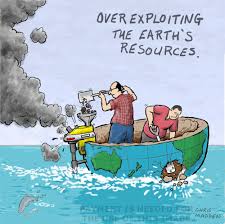
- Understand how economic decisions impact on people, communities, and nations.
Understand how people’s management of resources impacts on environmental and social sustainability.
Success Criteria
- Able to explain the definition of economics (scarcity, resources, wants, etc.
- Can share examples of how economics affects our everyday lives
Economics
Economics affects everything you, your friends and family do. It is the study of how to allocate scarce resources in order to satisfy unlimited wants and needs. Put simply, it's deciding what OUTPUTS (products) to produce and what INPUTS (resources) to use to produce them.
For example, should we: only use pubic transport, build more dams to encourage dairy farming in drought-prone regions, use nuclear powered ships, employ more nurses, pay politicians higher salaries, pay university fees out of taxes, have a larger army, charge tourists more to walk the Milford Track, allow only 2 companies to control all supermarkets, limit the amount of fish that can be caught, ban cigarettes, allow deforestation if it creates temporary jobs, etc.
In Economics, there are 4 types of resource that are used to make goods and services that people need or want (called the 'Factors of Production'). These are:
Natural resources - 'Land', trees in a native forest, rivers, iron ore/oil/rock/sand
People resources - 'Labour', teachers, lawyers, politicians, programmers, artists
Human-made resources - 'Capital', buildings, roads, trucks, ferries, computers
Enterprise - People who have an idea and bring the other three types of resource togetherHere's a short video clip that explains the 4 types of resource (Factors of Production), Opportunity Cost and Micro- and Macro-economics.
Accounting Cost is the money amount that we must pay (explicit cost).
In Economics, we also talk about Opportunity cost.
Opportunity Cost is the benefits that we miss out on because we've used our resources to produce one product and not another. For example, if you have $20 and pay for a movie ticket (and the enjoyment this gives you), you cannot have the next best alternative (perhaps the fun with your friends of buying a new basketball).
Economic Cost is Accounting Cost plus Opportunity Cost. For example:
If I buy wheat seeds and sow, water, fertilise and finally harvest them, I might have to pay $40 for seeds, water, my time, etc. I might sell the wheat for $100. My Accounting profit is $100 - $40 = $60
If I could have earned $55 from allowing campers to stay on the land, the Opportunity Cost is $55 (the next best alternative use).
My Economic profit from the wheat is $100 - $40 - $55 = $5. Because Economic Profit is a positive amount, I made a good choice to use my land, labour, capital & enterprise to grow wheat. I would have made $5 less profit from the next best alternative use of my resources.
Types of Economics
There are two types of economics:
Micro-economics studies individual industries and businesses eg competition, Monopoly power, Supply & Demand
Macro-economics studies whole country topics like inflation, growth, unemployment, investment, exports and trade.Real life example of Economics in action
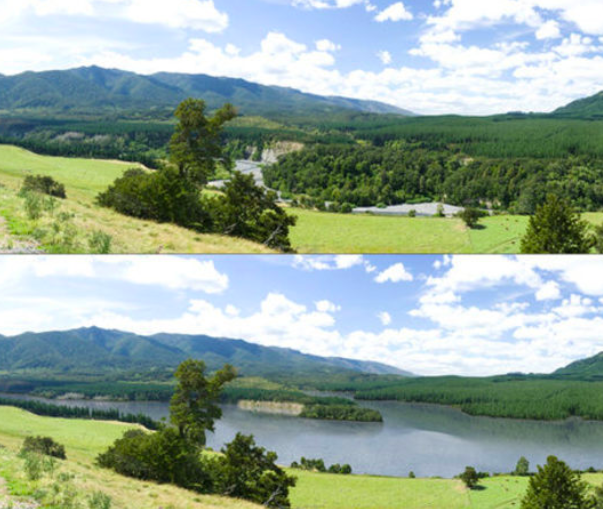
The Ruataniwha dam in Hawkes Bay will flood a large area of land in order to provide irrigation water for increased dairy farming in an area prone to drought. Environmentalists say that it will damage the quality of water in the region, encourages a form of farming that is unsustainable in this dry area, and will use millions of dollars that could be better spent elsewhere.
Some investors want the scheme because they think it will generate large profits for them. However, the latest assessments estimate that farmers will not afford the high price the water will have to be sold at to cover the huge costs. This case study can be explained in terms of scarce resources, factors of production, opportunity cost, who gets to choose what is produced with our resources, micro- and macro-economics.
Here are two links to articles about the proposed scheme
2018 article: https://www.radionz.co.nz/news/national/360937/ruataniwha-dam-scheme-revival-raises-doubts-in-hawke-s-bay
2019 article: https://www.stuff.co.nz/environment/110889921/the-ruataniwha-dam-proposal-might-be-dead-but-now-another-dam-is-touted-on-the-same-river-with-ratepayer-funding-soughtActivity
Work in small groups to individually complete the Google Doc titled "Ruataniwha Dam" from Google Classroom. You'll need to read the article above and discuss who is affected, how the decision should be made and whether you think the scheme should go ahead.
- Understand how economic decisions impact on people, communities, and nations.