Term 1: Week 2
Section outline
-
- We are DEFINING "What is a Treaty?"
- We are EXPLORING why different groups/stakeholders may have wanted a Treaty.
- We are EXPLORING reasons why some rangatira (chiefs) did not sign the Treaty of Waitangi.
- We are EXPLORING the key differences between the Māori and English versions of the Te Tiriti o Waitangi.
- We are EXPLORING why different groups/stakeholders may have wanted a Treaty.
- We are EXPLORING reasons why some rangatira (chiefs) did not sign the Treaty of Waitangi.
- We are RESEARCHING to place ourselves in the wider context of people and places that represent my whakapapa.

EXPLORE / TŪHURA learning intentions:

Through our learning context ‘Tūrangawaewae - Where do we stand?” we will continue to EXPLORE identity and place through the Māori World View.
Whakataukī: Mā te taiao kia whakapakari tōu oranga ‘Let nature in, strengthen your well-being.’
Authentic Outcomes: Camp Adair, Performance of the 'Kia Mana Ake' school haka, and personal mihi in Te Reo.
UN Goal: #11 ‘Sustainable Communities and Cities’
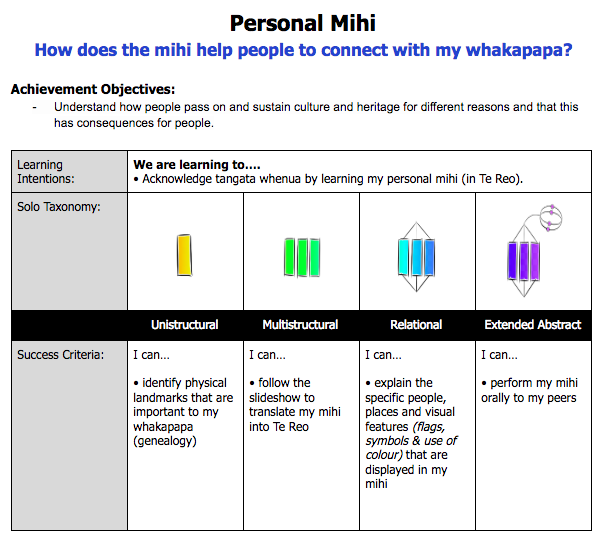
This week we will complete your 'Why do we celebrate Waitangi Day?' activity then learn how to create a personal mihi/pepeha.
Activities:
1. On Google Classroom, open your 'Why do we celebrate Waitangi Day?' document and complete the chart on Pg 2, to identify the similarities and differences between the English and Maori versions of the Treaty. Highlight which of the 3 articles are 'the same' or 'different'.
2. Complete questions 5 & 6 then revise your document, before 'turning in'.
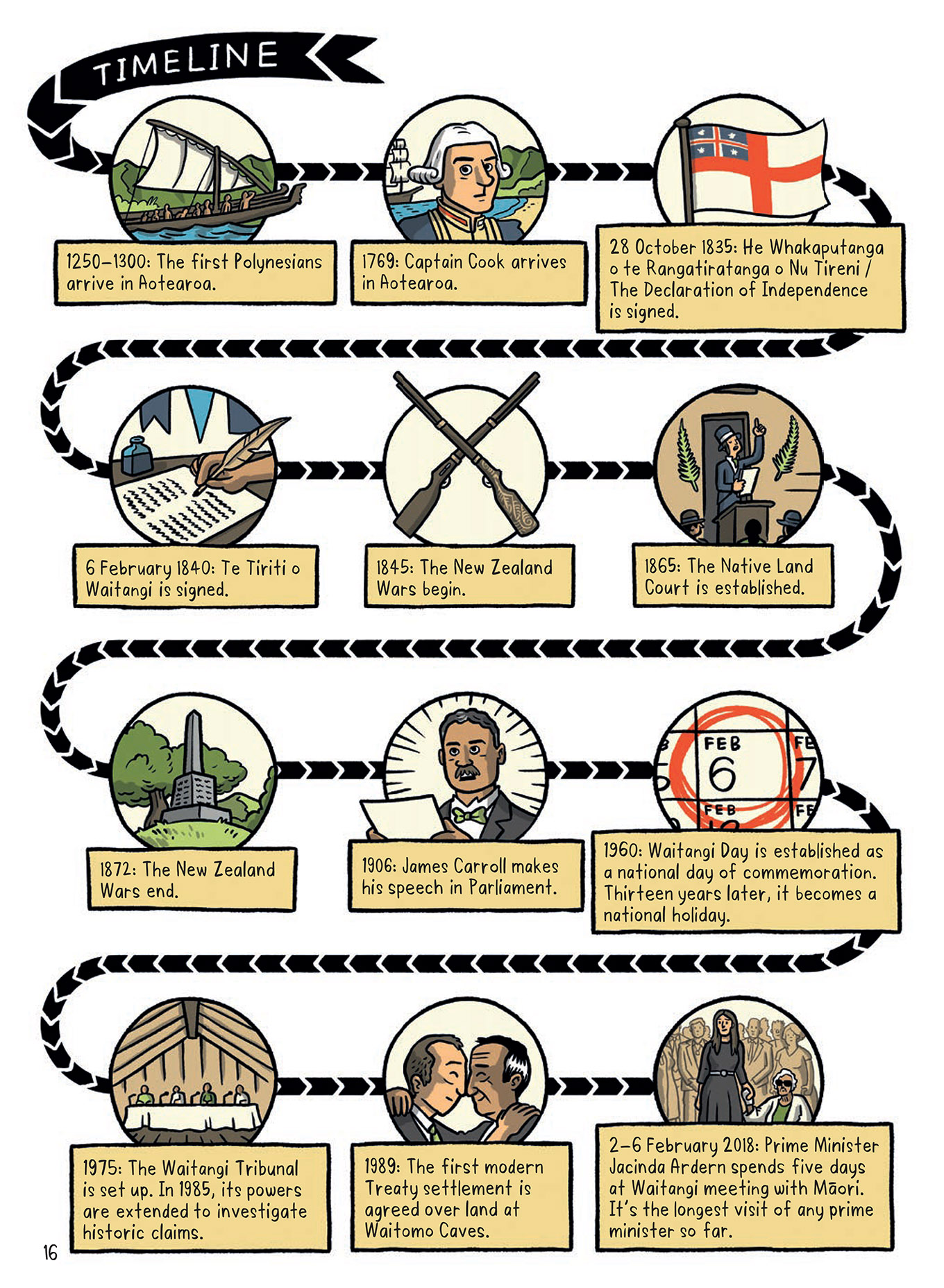
3. Complete a visual timeline in your exercise books, using pg 16 of the school journal to help you.
4. Speak to your family members about your whakapapa (genealogy) that could be represented in your mihi poster.
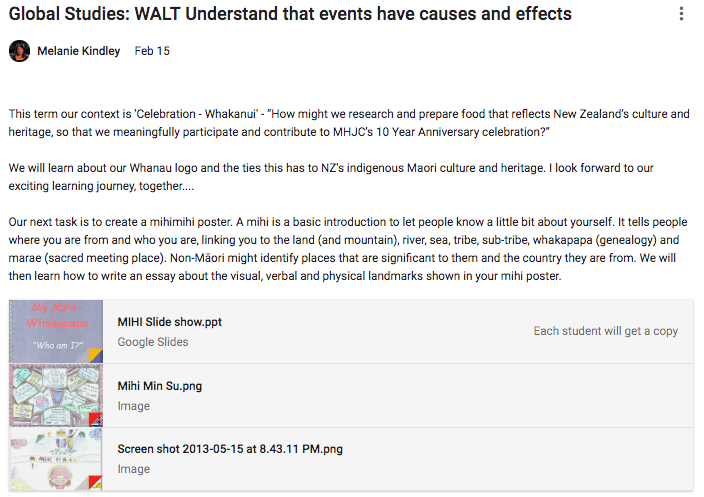
5. Read through the slideshow, 'My Mihi - Whakapapa' .
6. View the two exemplars of completed mihi posters. Contribute to the class discussion, what effective visual and verbal features have been used?
7. Write the LI and SC in your Global Studies exercise book.
8. Start developing your personal mihi in your Global Studies exercise book in both English and Te Reo, carefully selecting mountains, oceans, rivers and people that are important to you and to your family.
Further Learning: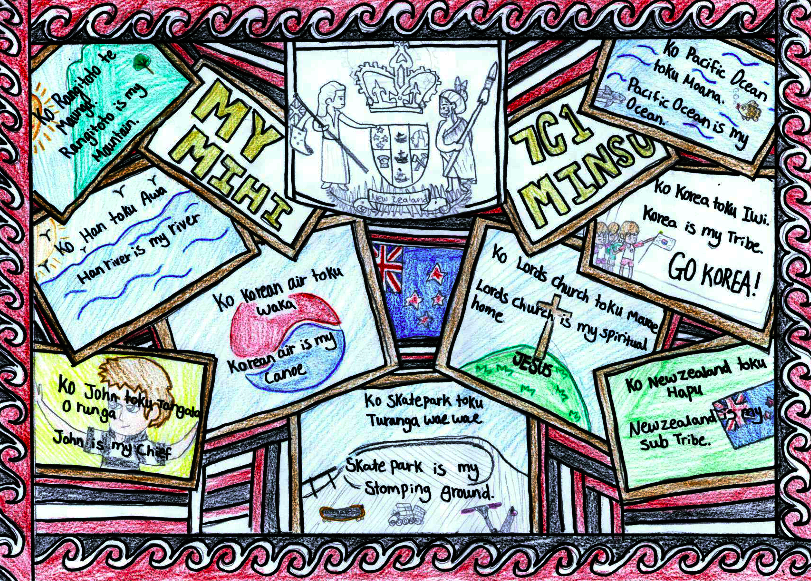
• Please complete your 'Why do we celebrate Waitangi Day?' document during classtime, and 'Turn In' for marking on Wednesday 12th February.
• Speak to your family members about your whakapapa (genealogy) that could be represented in your mihi poster.